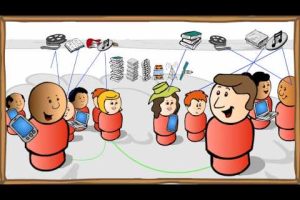
Searching for the définition social media in English often leads to overly technical jargon or superficial glossaries that fail to capture the true essence of these dynamic digital ecosystems. At its core, the social media definition refers to interactive digital technologies that facilitate the creation, sharing, and exchange of user-generated content within virtual communities and networks. Unlike traditional broadcast media, where a select few create content for passive consumption, social platforms empower billions of individuals to become active participants, creators, and curators of the digital landscape. From the early days of basic blogging to today’s algorithm-driven short-form video ecosystems, the meaning of social media has evolved dramatically. It now encompasses a vast array of online social networking services, including microblogging sites, photo-sharing applications, professional networking hubs, and immersive virtual environments. Understanding the social media definition is no longer just a matter of academic curiosity; it is a fundamental requirement for navigating modern communication, commerce, and community building.
What Exactly Is the Social Media Definition?
The definitive social media definition extends far beyond simply having an online profile. It describes a category of software applications built on the architectural foundation of Web 2.0, allowing users to generate and exchange content with minimal barriers. To fully grasp the social media definition, one must recognize that these platforms thrive on user interaction, algorithmic curation, and the blurring of lines between creator and consumer. When asking what is social media, the answer lies in the symbiotic relationship between the platform’s infrastructure and its human users. These digital environments are designed to encourage virality, community formation, and sustained engagement, transforming how we share ideas and conduct business across the globe.
The Core Pillars of Online Social Networks
To accurately define social media, we must break it down into its foundational components. These pillars distinguish a true interactive platform from a static website:
- User-Generated Content (UGC): The lifeblood of any social platform. Whether it is a TikTok dance, an Instagram photo, or a LinkedIn article, UGC is the raw material that drives these ecosystems.
- User-Created Profiles: Personalized digital identities allow users to build their own unique spaces within the network, fostering a sense of ownership, accountability, and digital self-expression.
- Interactive Connectivity: Features like comments, shares, reactions, and direct messaging enable two-way communication, turning monologues into dialogues and fostering deeper relational bonds.
- Algorithmic Feeds: Unlike chronological timelines of the past, modern platforms use complex algorithms to curate content based on user behavior, engagement patterns, and social signals.

Social Media vs. Traditional Media: A Comparative Look
Understanding the social media definition requires contrasting it with traditional media. While both serve as channels for information dissemination, their structural and operational differences are profound. Below is a comparison highlighting the distinct characteristics of each paradigm.
| Feature | Traditional Media | Social Media |
| Content Creation | Professionals, journalists, corporations | Anyone with internet access (User-Generated Content) |
| Distribution | One-to-many broadcast model | Many-to-many interactive network |
| Feedback Loop | Slow, indirect (letters, ratings) | Instant, direct (comments, shares, likes) |
| Cost of Entry | High (printing, broadcasting licenses) | Low to zero (requires only a smart device) |
| Targeting | Demographic and geographic broad casts | Hyper-specific behavioral and interest-based targeting |
This comparison illustrates why the definition of social media has revolutionized global communication. The democratization of content creation means that a single viral post can rival the reach of a million-dollar advertising campaign.
The Evolution and Importance of Digital Communication
From Early Networking to Algorithm-Driven Ecosystems
The journey of digital communication platforms began with simple chat rooms and early social networking sites like Friendster and MySpace. Back then, the social media definition was rudimentary, focused primarily on basic profile creation and friend lists. Fast forward to today, and the meaning of social media has expanded to include complex, algorithmically driven ecosystems. Platforms like TikTok and Instagram have redefined what it means to be social online, prioritizing visual storytelling and micro-content. The advent of smartphones and mobile-first design further accelerated this shift, putting powerful social tools in our pockets at all times. This evolution represents a fundamental shift in human behavior, transforming passive consumption into active participation and making digital interaction an indispensable part of daily life.
Why This Matters for Modern Users and Brands

Grasping the social media definition is critical for both individuals and organizations. For brands, it represents the most direct line of communication to their audience. For individuals, it is a space for identity expression, community building, and accessing real-time news. Ignoring the nuances of these platforms can result in missed opportunities or reputational damage. Social platforms are not just digital hangout spots; they are powerful engines for cultural shifts, social movements, and economic transactions that reshape our society daily.

Key Features That Define a Social Platform
When evaluating the social media definition, certain non-negotiable features consistently appear across successful platforms. If a digital service lacks these elements, it generally falls outside the realm of true social networking.
- Scalability and Reach: A defining characteristic is the ability to connect users across geographical boundaries seamlessly. A post made in Tokyo can instantly resonate with a user in New York.
- Community and Group Formation: These platforms enable users to form niche communities based on shared interests, hobbies, or professional affiliations. This fosters deep engagement and loyalty among members.
- Engagement Metrics: Social networks provide immediate feedback through likes, shares, and views. For creators and marketers, these metrics are essential for understanding audience resonance and refining strategies.
- Cross-Platform Integration: Modern digital ecosystems often allow users to share content across multiple networks effortlessly, extending the reach and interconnectedness of the social web.
Now that you understand the comprehensive social media definition, how can you leverage these platforms effectively? Whether you are a casual user looking to expand your network or a brand aiming to boost visibility, the following expert tips will help you navigate these interactive spaces successfully.
- Prioritize Authenticity Over Polish: Audiences on social platforms crave genuine connections. Overly scripted content often underperforms compared to raw, authentic user-generated material that feels relatable.
- Master the Algorithm: Understand that engagement begets visibility. Responding to comments quickly and encouraging shares signals to the platform that your content is valuable and worthy of distribution.
- Diversify Your Content Formats: The digital landscape is no longer text-heavy. Utilize short-form videos, carousels, podcasts, and live streams to capture different segments of your audience effectively.
- Engage in Active Listening: Use social listening tools to monitor conversations about your brand or industry. This provides invaluable insights into consumer sentiment and emerging trends before they peak.
- Maintain Consistency: Regular posting keeps your brand at the forefront of user feeds. Develop a content calendar to ensure a steady stream of relevant interactions and value.
Conclusion: Embracing the Digital Social Ecosystem
The social media definition continues to evolve as technology advances and user behaviors shift. What began as simple digital directories has transformed into the central nervous system of global communication. By understanding the core pillars—user-generated content, interactive profiles, algorithmic curation, and community formation—you can navigate these digital spaces with confidence and purpose. Whether you are building a personal brand, driving business growth, or simply staying connected with loved ones, mastering the meaning of social media empowers you to thrive in the digital age. Embrace the interactive nature of these platforms, stay adaptable to new features, and always prioritize genuine human connection above all else.
Frequently Asked Questions
What is the primary social media definition according to digital marketers? According to digital marketers, the social media definition is a collection of internet-based applications that build on the technological, ideological, and organizational foundations of Web 2.0, allowing users to create and exchange user-generated content. It is fundamentally different from traditional media because it is participatory, interactive, and decentralized.
How does the definition of social media differ from social networking? While the terms are often used interchangeably, the definition of social media is broader, encompassing all platforms for content sharing and interaction. Social networking, however, is a subset focused specifically on building and maintaining personal or professional relationships within those platforms. All social networking is social media, but not all social media is strictly for networking.
Why is user-generated content so central to the social media definition? User-generated content (UGC) is the lifeblood of the social media definition because it shifts the power from centralized broadcasters to individual users. Without UGC, a platform is just a static website. It is the act of users creating, commenting on, and sharing content that creates the dynamic, ever-evolving nature of these digital ecosystems.
Can the meaning of social media change over time? Absolutely. The meaning of social media has evolved significantly since its inception. Originally focused on text-based blogging and basic photo sharing, it now includes short-form video, ephemeral content like Stories, and even virtual reality spaces. As technology and user preferences shift, the definition must adapt to encompass these new forms of digital interaction.
What role do algorithms play in modern social platforms? Algorithms are the invisible engines that drive modern social platforms. They determine what content users see in their feeds based on past behavior, engagement history, and relevance signals. Understanding how algorithms work is crucial for anyone looking to master the social media definition, as they dictate the visibility and reach of all user-generated content.