Finding reliable cable internet near me can feel overwhelming when you are staring at a screen trying to compare providers, plans, and speeds in your specific area. Whether you just moved to a new neighborhood, cut the cord on your current service, or simply want a faster connection for remote work and streaming, the process of locating the best cable internet provider in your vicinity requires some strategic research. Unlike fiber-optic or satellite options, cable internet leverages the same coaxial infrastructure that delivers cable television, making it widely available across urban and suburban areas in the United States. This guide breaks down everything you need to know about finding, evaluating, and choosing the ideal cable internet plan for your home or business.
What Is Cable Internet and How Does It Work?
Cable internet is a broadband connection delivered through the same coaxial cable network used for cable television. A cable modem connects to the incoming coaxial line in your home, translating the signal into data that your devices can use. One of the biggest advantages of cable internet is that it provides simultaneous access to television and internet services through a single infrastructure, which often makes it more cost-effective than standalone options.
The technology relies on hybrid fiber-coaxial (HFC) networks, where fiber-optic cables carry data to a local node and coaxial cables distribute it to individual homes. This setup allows cable internet to deliver significantly faster speeds than older DSL connections, though it typically falls short of dedicated fiber-optic service. Shared bandwidth within your neighborhood can occasionally affect performance during peak usage hours, but modern DOCSIS 3.1 and 4.0 technologies have drastically improved consistency and throughput.
How to Find Cable Internet Providers Near You
The first step in locating cable internet providers near my location involves a few practical strategies that go beyond simply Googling your zip code. Here is a systematic approach to identifying available options in your area:

- Use FCC Broadband Maps: The Federal Communications Commission maintains an interactive broadband map at broadbandmap.fcc.gov that lists all available internet providers by address. This is the most authoritative resource for verifying coverage.
- Check Provider Websites Directly: Major cable companies like Comcast Xfinity, Spectrum, Cox, and Mediacom allow you to enter your address on their websites to confirm service availability and specific plan options.
- Use Third-Party Comparison Tools: Websites like BroadbandNow, AllConnect, and ISP-Inspector aggregate local provider data and let you filter results by speed, price, and technology type.
- Ask Neighbors: Local community forums and Nextdoor groups are goldmines for real-world feedback on which providers deliver consistent speeds and reliable customer service in your specific area.
- Contact Local Municipalities: Some cities have partnerships with municipal broadband networks or community cooperatives that offer cable internet at competitive rates.
Top Cable Internet Providers by Region
Availability varies significantly depending on where you live. Here is a snapshot of the dominant cable internet providers in major regions across the United States:
- Comcast Xfinity: Dominates the Northeast, Midwest, West Coast, and parts of the South with DOCSIS 3.1 coverage in over 40 states.
- Spectrum (Charter Communications): Strong presence in the Northeast, Midwest, and Southern states with no annual contracts and widely available gigabit tiers.
- Cox Communications: Primarily serves the Southwest, Southeast, and parts of the Midwest with competitive multi-gig plans.
- Mediacom: Covers rural and mid-sized communities across 22 states, often providing affordable entry-level cable internet options.
- Altice USA (Optimum): Operates in the Northeast and Mid-Atlantic with growing fiber-hybrid networks.
Cable Internet Speeds: What to Expect
Understanding the speed tiers available through cable internet is essential when searching for best cable internet near me. Most major providers offer plans ranging from 100 Mbps to 10 Gbps, with some newer networks pushing even higher.
| Speed Tier | Typical Use Case | Common Providers |
| 100–200 Mbps | 1–2 users, browsing, HD streaming | Spectrum, Mediacom |
| 300–500 Mbps | 3–4 users, 4K streaming, gaming | Xfinity, Cox, Optimum |
| 1 Gbps (1,000 Mbps) | Large households, smart homes, WFH | Xfinity, Spectrum, Cox |
| 2–5 Gbps | Heavy users, multiple 4K streams, file uploads | Xfinity, Cox |
| 10 Gbps | Power users, small businesses, multiple simultaneous streams | Xfinity (limited availability) |
Keep in mind that advertised speeds are typically “up to” figures. Real-world performance depends on network congestion in your area, the quality of your coaxial wiring, and the modem or gateway you use. Upgrading to a DOCSIS 3.1 modem can unlock the full potential of gigabit-tier plans.
Cable Internet vs. Other Connection Types
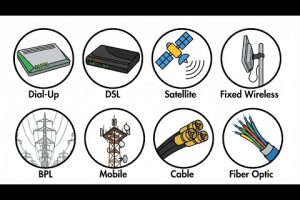
When evaluating cable internet near me, it is important to understand how it stacks up against alternative broadband technologies. Each option has distinct strengths and trade-offs depending on your location, budget, and usage needs.
Key Factors to Consider When Choosing a Provider
Beyond raw speed, several factors determine whether a cable internet provider is the right fit for your household:
- Data Caps: Many cable providers enforce monthly data limits, typically ranging from 1 TB to 1.2 TB. Overage fees can add $10–$15 per month beyond the cap. Some providers like Spectrum have eliminated data caps entirely.
- Pricing After Promotional Periods: Introductory rates are tempting, but standard pricing often jumps 30–50% after the first 12 months. Always check the renewal rate before signing up.
- Equipment Costs: Renting a modem/gateway from your provider usually costs $10–$15/month, but purchasing a compatible DOCSIS 3.1 modem outright can save you $150–$180 per year.
- Contract Terms: Some providers lock you into 12- or 24-month agreements with early termination fees. Others like Spectrum and many smaller cable ISPs offer no-contract flexibility.
- Upload Speeds: Cable internet traditionally has asymmetrical speeds. DOCSIS 3.1 improves upload rates significantly, but fiber still leads in this category.
Tips for Getting the Best Cable Internet Deal
Maximizing value when subscribing to a cable internet plan requires a combination of timing, negotiation, and awareness of hidden fees. Here are expert strategies to help you save money without sacrificing quality:
- Bundle with Television or Phone: Cable companies frequently offer discounts of $20–$50/month when you combine internet with their TV or home phone services.
- Negotiate with Retention Departments: If your current bill increases, call the retention or loyalty team and mention competitor pricing. They often have unadvertised promotional rates available.
- Check for Government Subsidies: Programs like the FCC Affordable Connectivity Program (ACP) and Lifeline can reduce monthly internet bills by up to $30 for qualifying households.
- Time Your Purchase: Providers often run promotions during holiday periods, back-to-school seasons, and at the start of the new year when they are trying to attract new customers.
- Review Your Bill Annually: Services like BillShark or Truebill can analyze your cable internet bill and negotiate lower rates on your behalf.
- Own Your Equipment: Buying an approved modem instead of renting saves significant money over a two- or three-year period, and you avoid the frustration of rental fees stacking up.
Is Cable Internet Right for You?
Cable internet remains one of the most accessible and high-performance broadband options available in the United States. For households that need reliable, high-speed connectivity for streaming, remote work, online gaming, and smart home ecosystems, cable internet delivers an excellent balance of speed, availability, and affordability. It is especially well-suited for urban and suburban areas where the coaxial infrastructure is well-established and providers compete aggressively for subscribers.
If fiber-optic service is available at your address and the price difference is marginal, fiber may offer superior symmetrical speeds and consistency. However, for the vast majority of American households, cable internet provides a dependable and fast connection that meets or exceeds the needs of modern digital life. The key is to research your specific area, compare plans side by side, and read the fine print on contract terms and pricing.
Frequently Asked Questions
1. What is the fastest cable internet speed available near me?
The fastest cable internet plans currently available reach up to 10 Gbps, offered primarily by Xfinity in select markets. Most providers offer tiers up to 2–5 Gbps in their coverage areas. Availability of these ultra-fast tiers depends on your location and whether the provider has upgraded its local infrastructure to DOCSIS 3.1 or 4.0 technology.
2. How much does cable internet cost per month on average?
Entry-level cable internet plans typically start around $30–$50/month for speeds of 100–200 Mbps. Mid-tier plans offering 300–500 Mbps generally range from $50–$80/month, while gigabit plans fall between $80–$130/month depending on the provider and any bundled services. Always verify whether the promotional rate is locked for a specific duration.
3. Can I get cable internet if I do not have cable TV?
Absolutely. Many cable internet providers, including Spectrum and Xfinity, offer standalone internet plans without requiring a cable television subscription. In fact, more households are opting for internet-only plans and supplementing their entertainment needs with streaming services like Netflix, Hulu, and Disney+.
4. Does cable internet slow down at night?
Cable internet can experience congestion during peak evening hours, typically between 7 PM and 11 PM, when many users in the same neighborhood are streaming, gaming, or video conferencing simultaneously. DOCSIS 3.1 and 4.0 technologies have mitigated this issue significantly, but if you live in a densely populated area, you may still notice speed dips during the busiest hours.
5. What modem do I need for cable internet?
For plans up to 1 Gbps, a DOCSIS 3.0 modem is usually sufficient. For gigabit and multi-gig plans, a DOCSIS 3.1 modem is required to unlock the full speed potential. Some providers provide a modem/gateway unit as part of your subscription, but purchasing your own compatible model can save money and give you more control over your network equipment.
6. How do I test my cable internet speed accurately?
Use trusted speed-testing tools like Speedtest.net, Fast.com, or Google’s built-in speed test. For the most accurate results, connect your device directly to the modem or router via an Ethernet cable rather than relying on Wi-Fi, which can introduce latency and variability. Run tests at different times of day to understand how peak-hour congestion affects your connection.
Choosing the right cable internet provider near you ultimately comes down to balancing speed, price, data policies, and reliability based on your household’s specific needs. With the information and strategies outlined in this guide, you are now equipped to make a confident, informed decision. Take the time to compare plans, read recent customer reviews for providers in your area, and do not hesitate to negotiate for better terms. A great cable internet connection is not just a luxury — it is the backbone of modern life, powering everything from your morning video meetings to your evening streaming sessions.