


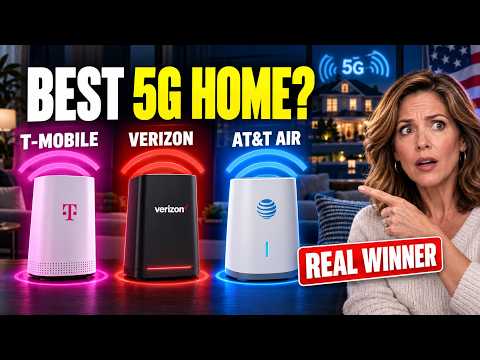
5G home internet services are rapidly transforming the way households connect to the web, offering a compelling alternative to traditional cable, DSL, and fiber connections. With blazing speeds, low latency, and no need for cumbersome wiring, fixed wireless 5G internet is becoming a go-to choice for cord-cutters, rural households, and anyone seeking a reliable broadband connection without the hassle of a technician visit. In this comprehensive guide, we will explore everything you need to know about 5G home internet, from how it works and which providers lead the market to practical tips for getting the most out of your service.
What Is 5G Home Internet?
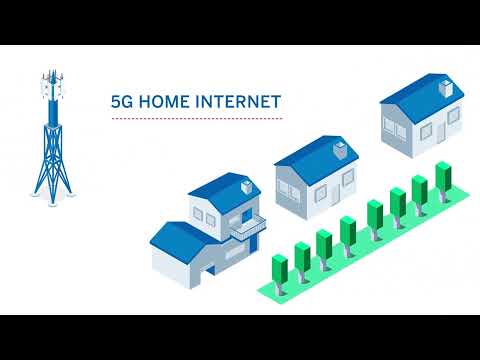
5G home internet refers to a fixed wireless access (FWA) service that delivers broadband connectivity directly to your home using 5G cellular networks. Instead of relying on underground copper cables or fiber-optic lines, a small 5G receiver or gateway unit is installed at your residence, communicating with nearby cell towers to provide high-speed internet access. Major carriers including T-Mobile 5G Home Internet, Verizon 5G Home Internet, and AT&T Fixed Wireless Internet have rolled out these services across much of the United States, making them accessible to millions of households.
Unlike mobile 5G plans designed for smartphones, 5G home internet is specifically engineered for stationary use, delivering consistent speeds suitable for streaming, gaming, remote work, and smart home ecosystems. The technology leverages millimeter wave (mmWave), mid-band, and low-band 5G spectrum depending on your location, which directly impacts the speeds and reliability you can expect.
How Does 5G Home Internet Work?
Understanding the mechanics of 5G home internet helps set realistic expectations and informs your purchasing decisions. Here is a simplified breakdown of the process:
- Signal Reception: A compact outdoor antenna or receiver is mounted on your home, typically on a roof, balcony, or window facing the nearest 5G tower.
- Signal Conversion: The receiver captures radio frequency signals from the 5G network and converts them into data packets.
- Gateway Distribution: A gateway device (similar in size to a router) inside your home distributes the internet connection via Wi-Fi or Ethernet cables to your devices.
- Continuous Optimization: Modern 5G gateways automatically switch between frequency bands and optimize signal strength to maintain the best possible connection.
Key 5G Frequency Bands Explained
The performance of your 5G home internet depends heavily on the spectrum band used in your area:
- Low-Band 5G: Offers wide coverage but moderate speed improvements over 4G LTE. Ideal for rural and suburban areas where tower density is lower.
- Mid-Band 5G: Strikes the best balance between speed and coverage, delivering 100–300 Mbps in most populated regions.
- Millimeter Wave (mmWave): Provides ultra-fast speeds of 1 Gbps or more, but with a limited range and susceptibility to obstacles like walls and trees.
Top 5G Home Internet Providers Compared
Choosing the right provider is critical to getting the best value from your 5G home internet service. Below is a detailed comparison of the leading carriers currently offering fixed wireless internet plans.
| Provider | Typical Speed Range | Monthly Cost | Data Cap | Installation |
| T-Mobile 5G Home Internet | 100–300 Mbps (up to 1 Gbps) | $50–$70/month | None (unlimited) | Free professional setup |
| Verizon 5G Home Internet | 200–1,000 Mbps | $50–$80/month | None (unlimited) | Free professional setup |
| AT&T Fixed Wireless Internet | 100–500 Mbps | $55–$75/month | None (unlimited) | Free professional setup |
| C Spire 5G Home Internet | 50–200 Mbps | $50–$60/month | None (unlimited) | Free self-install option |
| Verizon LTE Home Internet | 10–50 Mbps | $25–$40/month | None (unlimited) | Free professional setup |
T-Mobile stands out for its extensive mid-band and low-band 5G coverage, making it the most widely available option across the U.S. Verizon excels in areas with robust mmWave deployment, delivering some of the fastest speeds available in fixed wireless. AT&T offers a solid middle-ground option, particularly for customers already on AT&T wireless plans who can bundle services for additional savings.
Benefits of 5G Home Internet
There are numerous advantages that make 5G home internet an attractive choice for modern households:
- No installation fees or contracts: Most providers offer month-to-month plans with no long-term commitment, giving you full flexibility.
- Rapid deployment: A technician can set up your service in under an hour, compared to the days or weeks required for traditional cable or fiber installations.
- Unlimited data: Unlike many DSL and cable plans, all major 5G home internet plans include unlimited data with no throttling.
- Symmetrical performance for most tasks: Upload and download speeds are competitive with entry-level fiber, making video calls, cloud backups, and file sharing seamless.
- Ideal for rural and underserved areas: Where cable and fiber infrastructure are absent, 5G fixed wireless bridges the digital divide effectively.
- Low latency for real-time applications: 5G networks deliver latencies as low as 10–20 milliseconds, which is excellent for online gaming, video conferencing, and cloud computing.
Limitations and Considerations
While 5G home internet is impressive, it is not without its limitations. Being aware of these factors will help you make an informed decision:
- Coverage dependency: Service quality is entirely dependent on proximity to a 5G tower. Homes in remote areas or signal-dead zones may experience inconsistent speeds.
- Weather sensitivity: mmWave signals in particular can degrade during heavy rain, snow, or dense fog, though mid-band and low-band are far less affected.
- Obstruction challenges: Buildings, dense foliage, and even large vehicles can interfere with signal reception, making proper antenna placement essential.
- Variable speeds: Unlike fiber, which offers consistent speeds regardless of time of day, 5G home internet may experience speed fluctuations during peak usage hours in congested areas.
- Indoor reception issues: Some homes, particularly those with thick walls or metal roofing, may require professional antenna mounting or signal boosters for optimal performance.
How to Choose the Right 5G Home Internet Plan
Selecting the best 5G home internet plan requires a practical assessment of your household’s needs and your local coverage landscape. Here are expert recommendations to guide your decision:
- Check coverage maps first: Visit your preferred carrier’s official coverage map and enter your exact address. T-Mobile, Verizon, and AT&T all provide interactive tools that show expected 5G availability at your location.
- Evaluate your speed requirements: For a household of two to three people streaming and browsing, 100 Mbps is sufficient. Larger families or remote workers should aim for 300 Mbps or higher.
- Consider bundling options: If you already use a carrier’s mobile services, inquire about loyalty discounts, autopay credits, or bundled plans that reduce your monthly bill.
- Read real user reviews for your area: Speedtest databases and community forums reveal how 5G home internet performs in specific neighborhoods, giving you a more accurate picture than marketing materials.
- Ask about the gateway equipment: Ensure the provider supplies a modern gateway with Wi-Fi 6 support, as this significantly impacts the wireless performance within your home.
- Test the service before committing: Some carriers offer trial periods or money-back guarantees. Take advantage of these to confirm that the speeds and reliability meet your expectations.
Expert Tips for Maximizing Your 5G Home Internet Performance
Even after installation, there are steps you can take to squeeze every bit of performance from your 5G connection. Position your gateway in a central location away from metal appliances and thick walls. If you experience slow speeds indoors, experiment with different window placements for the outdoor antenna or request a signal booster from your provider. Regularly reboot your gateway to clear cache and refresh network connections, and use a wired Ethernet connection for latency-sensitive activities like gaming and video calls.
5G Home Internet Frequently Asked Questions
Is 5G home internet as reliable as cable or fiber?
For most households in areas with strong 5G coverage, 5G home internet is highly reliable and competitive with cable and entry-level fiber connections. However, fiber still holds a slight edge in consistency and symmetrical upload speeds. 5G home internet excels in areas where traditional wired infrastructure is unavailable or unreliable.
Can I replace my current internet provider with 5G home internet?

Absolutely. Many households have successfully cut the cord and switched to 5G home internet as their primary broadband service. As long as your location has adequate 5G coverage and your speed requirements fall within the provider’s advertised range, it is a fully viable replacement for cable, DSL, or satellite internet.
What is the average cost of 5G home internet per month?

Most 5G home internet plans range from $50 to $80 per month, making them significantly more affordable than average cable internet bills, which hover around $75–$110 per month. T-Mobile and Verizon are particularly competitive, often offering promotional pricing for the first year.
Does 5G home internet work well for work-from-home and video conferencing?
Yes, 5G home internet performs excellently for remote work scenarios. The low latency and high bandwidth of modern 5G networks support smooth video conferencing, large file uploads, VPN connections, and cloud-based applications without noticeable lag or disruption.
Do I need special equipment for 5G home internet?
Yes, all providers supply a 5G gateway unit that serves as both a receiver and a Wi-Fi router. The equipment is typically provided at no extra cost, though some carriers may charge a monthly equipment fee of around $10–$15. No additional modems or wiring is required.
Is 5G home internet available in rural areas?
This is one of the most significant advantages of 5G fixed wireless. Because it does not require physical cable infrastructure, 5G home internet is often available in rural and remote areas where cable and fiber do not reach. Low-band and mid-band 5G signals can travel farther than mmWave, making rural coverage increasingly practical.
Conclusion
5G home internet services represent a genuine paradigm shift in residential broadband, delivering fiber-competitive speeds with the convenience of wireless installation and no contracts. Whether you are a remote worker seeking dependable connectivity, a family cutting the cord on cable television and internet, or a rural household frustrated by slow DSL and satellite options, 5G fixed wireless internet deserves serious consideration. By understanding how the technology works, comparing providers, assessing your local coverage, and following practical setup tips, you can make a confident choice that keeps your household connected at the highest level. The future of home internet is wireless, and 5G home services are leading the charge right now.