


5G internet service represents the most significant leap forward in wireless connectivity since broadband itself. Whether you are a home user looking for faster streaming, a remote worker demanding rock-solid reliability, or a business owner exploring next-generation connectivity, understanding what 5G offers—and how it compares to previous generations—is essential. This comprehensive guide breaks down everything you need to know about 5G internet service, from how the technology works behind the scenes to practical steps you can take to get the most out of it in 2024 and beyond.
What Is 5G Internet Service and Why It Matters
5G internet service refers to the fifth generation of cellular network technology, designed to deliver dramatically faster speeds, ultra-low latency, and the capacity to connect vastly more devices simultaneously compared to 4G LTE. While 4G networks typically peak around 100 Mbps in real-world conditions, 5G can deliver download speeds ranging from 100 Mbps all the way up to 10 Gbps under ideal circumstances. But speed alone does not tell the full story. The real power of 5G wireless internet lies in its ability to handle massive IoT deployments, power autonomous vehicles, enable real-time telemedicine, and transform smart city infrastructure.
Telecommunications companies including Verizon, T-Mobile, AT&T, and global carriers have invested billions in 5G infrastructure deployment. The rollout has accelerated rapidly, with millions of consumers now accessing 5G home internet plans, mobile hotboxes, and enterprise-grade solutions. Understanding the nuances of 5G network coverage and the different spectrum bands is the first step toward making an informed decision.
How 5G Technology Works – The Three Key Bands
5G operates across three primary spectrum bands, each offering a unique balance of speed, range, and penetration. Knowing the difference matters enormously when evaluating 5G internet service options in your area.
Low-Band 5G (Sub-1 GHz)
Low-band 5G uses frequencies below 1 GHz, similar to those used by 4G networks. The advantage is broad coverage and excellent building penetration. Low-band 5G delivers modest speed improvements over 4G—typically 20% to 50% faster—but provides the widest reach. Carriers use low-band as the foundation for nationwide 5G coverage maps.
Mid-Band 5G (1 GHz to 6 GHz)
Mid-band 5G, often built around the C-band spectrum (3.7–3.98 GHz), strikes the best balance between speed and coverage. It offers substantially faster download speeds than low-band while maintaining reasonable range. For most consumers, mid-band 5G represents the sweet spot for everyday use, delivering consistent gigabit-class speeds in populated areas.
High-Band mmWave 5G (24 GHz to 47 GHz)
Millimeter wave 5G operates at the highest frequencies and delivers the absolute fastest speeds—often exceeding 3 Gbps in optimal conditions. However, mmWave signals have extremely limited range, typically covering a few city blocks, and struggle with obstacles like walls and trees. This makes mmWave best suited for dense urban environments, stadiums, and enterprise campuses where ultra-low latency is critical.

5G vs 4G LTE – Speed, Latency, and Capacity Compared
Understanding the tangible differences between 5G and 4G helps clarify why so many users are switching. The table below summarizes key performance metrics.

| Metric | 4G LTE | 5G |
| Peak Download Speed | ~1 Gbps | ~10–20 Gbps |
| Typical Real-World Speed | 20–100 Mbps | 100 Mbps–3 Gbps |
| Latency | 30–50 ms | 1–10 ms |
| Device Density per km² | ~100,000 | ~1,000,000 |
| Bandwidth per Channel | Up to 100 MHz | Up to 400 MHz |
| Typical Home Plans (monthly) | $50–$80 | $50–$110 |
The latency improvement alone is transformative. For gamers, video conferencing professionals, and anyone relying on real-time applications, the jump from 30 milliseconds down to single-digit milliseconds makes a visible, tangible difference. Similarly, the massively increased device density means 5G can support smart home ecosystems and industrial sensors without congestion.
Top Benefits of Switching to 5G Internet Service
There are compelling reasons millions of users are making the switch to 5G home internet and mobile 5G plans. Here are the standout benefits:
- Blazing Fast Speeds – Downloading a 2-hour HD movie takes seconds instead of minutes. Video calls stay crystal clear even at 4K resolution.
- Ultra-Low Latency – Real-time applications like cloud gaming, remote surgery guidance, and AR/VR experiences become genuinely practical.
- Massive Connectivity – 5G can handle dense deployments of IoT devices, smart appliances, and sensors without performance degradation.
- Fixed Wireless Alternative to Cable – 5G home internet providers offer a reliable, no-installation-needed alternative to traditional broadband, particularly valuable in rural and underserved areas.
- Future-Proof Investment – As applications evolve toward augmented reality, autonomous systems, and AI-driven services, 5G provides the bandwidth backbone those technologies demand.
How to Get 5G Internet Service at Home
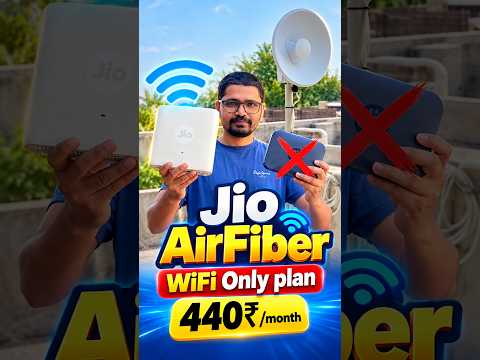
Setting up 5G internet service at home is simpler than most people assume. Unlike fiber or cable installations that require technician visits and physical wiring, 5G home internet uses a fixed wireless access device—a small receiver or gateway placed near a window or outside your home. Here is a practical roadmap:
- Check Coverage Maps – Visit the websites of major carriers like T-Mobile Home Internet, Verizon 5G Home, and AT&T Internet to verify availability at your specific address. Coverage varies block by block, especially for mmWave services.
- Compare Plans and Data Caps – Some 5G home plans offer unlimited data, while others impose soft caps or throttling thresholds. Review the fine print carefully.
- Choose the Right Equipment – Most carriers provide a 5G gateway device at no extra charge or for a small monthly fee. Ensure the device supports the bands available in your area.
- Optimize Placement – Position your 5G receiver in a location with the clearest line of sight to the nearest cell tower. A basement or interior room far from windows may result in weaker signals.
- Monitor Performance – Use speed test apps regularly to confirm you are receiving the speeds promised by your plan. If performance drops, contact your carrier or consider relocating the device.
Common Challenges and Limitations of 5G Internet Service
Despite its transformative potential, 5G internet service is not without limitations. Honest awareness of these challenges helps set realistic expectations:
- Coverage Gaps – Especially for mid-band and mmWave 5G, coverage remains uneven. Rural areas and suburban neighborhoods may still rely heavily on 4G LTE.
- Building Penetration – Higher-frequency signals struggle to penetrate thick walls, concrete, and energy-efficient glass. Indoor 5G performance can be inconsistent.
- Weather Sensitivity – mmWave signals can degrade during heavy rain or atmospheric conditions, though this primarily affects outdoor point-to-point links.
- Cost Considerations – While 5G plans are increasingly competitive, premium 5G tiers with guaranteed speeds or enterprise-grade SLAs can be expensive.
- Device Compatibility – Older smartphones and routers may not support 5G bands, requiring hardware upgrades.
Expert Tips for Maximizing Your 5G Experience
To get the most from your 5G wireless internet connection, consider these proven strategies. First, always check for firmware updates on your 5G gateway—manufacturers regularly improve band management and signal processing through software patches. Second, invest in a mesh Wi-Fi system if your home is large, since the 5G gateway’s built-in router may not cover every corner. Third, use Wi-Fi 6 or Wi-Fi 6E compatible devices to fully leverage the high-speed throughput 5G provides. Fourth, if you experience frequent signal drops, a directional outdoor antenna can dramatically improve reception in fringe coverage areas. Finally, consider bundling your 5G service with a wired backup connection for mission-critical work to ensure uninterrupted productivity.
Frequently Asked Questions
What is 5G internet service best used for?
5G internet service excels in bandwidth-intensive activities such as 4K video streaming, cloud gaming, large file downloads, video conferencing, and supporting multiple simultaneous smart home devices. It is also increasingly popular as a primary home broadband replacement, especially in areas where traditional cable or fiber infrastructure is limited or unavailable.
Is 5G internet safe for long-term home use?
Yes. Regulatory bodies including the FCC and WHO have reviewed radiofrequency exposure from 5G networks and confirm they fall well within established safety guidelines. 5G base stations and consumer devices emit non-ionizing radiation, which does not damage DNA or tissue the way ionizing radiation such as X-rays can.
How does 5G home internet compare to fiber optic broadband?
Fiber optic broadband generally offers more consistent speeds and symmetrical upload/download rates, making it the gold standard for heavy users and businesses. However, 5G home internet provides a compelling alternative where fiber is unavailable, offering competitive download speeds with the convenience of wireless installation and no physical infrastructure requirements.
Can I use 5G internet service for online gaming?
Absolutely. The ultra-low latency of 5G—often between 1 and 10 milliseconds—makes it highly suitable for competitive online gaming. Cloud gaming platforms like Xbox Cloud Gaming and NVIDIA GeForce NOW perform exceptionally well on stable 5G connections, provided local network congestion is managed effectively.
What should I look for when choosing a 5G internet provider?
Focus on three factors: local coverage reliability at your specific address, consistent speed benchmarks rather than advertised peak speeds, and contract flexibility. Look for providers offering trial periods or money-back guarantees so you can test the service before committing to a long-term plan.
Conclusion
5G internet service is not merely an incremental upgrade—it is a foundational shift in how we connect, communicate, and conduct business. From the blistering speeds of mmWave in city centers to the reliable reach of low-band coverage in rural communities, 5G delivers a level of wireless performance that unlocks possibilities previously reserved for wired connections. Whether you are a consumer seeking a faster home internet experience, a remote professional demanding zero-lag video calls, or an enterprise exploring IoT and automation, the time to explore what 5G internet service can offer has never been better. Stay informed, choose the right plan and equipment for your needs, and position yourself to take full advantage of the connectivity revolution already unfolding around us.