Cable broadband providers form the backbone of residential internet access for millions of households across the United States and beyond. Whether you are a first-time subscriber trying to understand what kind of internet service fits your needs or a seasoned cord-cutter evaluating the fastest cable internet plans on the market, knowing how to compare cable broadband providers can save you hundreds of dollars per year and countless hours of frustration. This guide covers everything from the technical fundamentals of coaxial cable internet to hands-on tips for selecting the best cable internet provider for your home setup. We will explore speed tiers, pricing structures, hidden fees, and the competitive landscape so you can make an informed decision with confidence.

What Are Cable Broadband Providers and Why Do They Matter?
Cable broadband providers are internet service companies that deliver high-speed connectivity to homes and businesses using the same coaxial or hybrid fiber-coaxial (HFC) infrastructure originally built for cable television. Unlike DSL, which relies on copper telephone lines, or fiber-optic services that use glass filaments, cable internet leverages the extensive television wiring networks that already exist in most urban and suburban neighborhoods. Major cable broadband providers such as Comcast Xfinity, Charter Spectrum, Cox Communications, and Mediacom collectively serve a dominant share of the American broadband market, giving them significant influence over pricing, availability, and innovation in home internet services.
Understanding which cable broadband provider operates in your area is the first critical step because infrastructure ownership heavily dictates your options. In many regions, only one or two cable internet companies hold the franchise rights to run their coaxial lines through local streets, creating a near-monopoly situation. This reality makes comparing cable broadband providers not just a smart shopping move but a necessary one if you want to avoid overpaying for subpar service.
How Cable Broadband Technology Works
Cable internet operates using a shared network architecture where data signals travel through coaxial cables from a provider’s headend facility to neighborhoods and then into individual homes via a cable modem. The modem translates those electrical signals into digital data your devices can interpret. Here is a simplified breakdown of the process:
- The cable broadband provider sends data signals through fiber-optic backbone lines to a local node in your community.
- From the node, coaxial cables carry signals to homes in a specific service area called a node segment.
- A cable modem installed at your home receives the signal and converts it into usable internet data.
- A router then distributes the connection to your devices via Wi-Fi or Ethernet cables.
The shared nature of this infrastructure means that your actual speeds can fluctuate depending on how many neighbors are online simultaneously. Cable broadband providers manage this through a technology called DOCSIS (Data Over Cable Service Interface Specification), with the latest DOCSIS 3.1 and DOCSIS 4.0 standards dramatically improving throughput and reducing congestion.

DOCSIS Versions and Their Impact on Speed
DOCSIS 3.0 remains the most widely deployed standard among cable broadband providers and supports aggregated channel bonding for speeds up to approximately 1 Gbps. DOCSIS 3.1 introduces orthogonal frequency-division multiplexing (OFDM) to deliver symmetrical gigabit speeds over existing coaxial infrastructure. The newest DOCSIS 4.0 specification pushes potential speeds beyond 10 Gbps, though very few providers have fully deployed this standard yet. When evaluating cable internet plans, checking which DOCSIS version your provider supports gives you a clear indicator of the performance ceiling you can expect.
Top Cable Broadband Providers Compared
Not all cable internet companies offer the same value proposition. Some prioritize raw speed, others focus on pricing consistency, and a few bundle internet with television and phone services for maximum convenience. The table below compares the leading cable broadband providers across key metrics that matter most to consumers.
| Provider | Max Speed | Starting Price (/mo) | Contract | Data Cap |
| Comcast Xfinity | 8 Gbps | $35.00 | 12 months | 1.2 TB |
| Charter Spectrum | 2 Gbps | $49.99 | None | None |
| Cox Communications | 2 Gbps | $29.99 | 12 months | 1.25 TB |
| Mediacom | 1 Gbps | $19.99 | 12 months | 6 TB |
| Optimum (Suddenlink) | 5 Gbps | $25.00 | None | None |
| RCN | 2 Gbps | $29.99 | 12 months | None |
As you can see from the comparison table, pricing and speed ranges vary significantly across cable broadband providers. Charter Spectrum stands out for offering no contract and no data cap, while Mediacom attracts budget-conscious users with its low starting price and generous data allowance. Xfinity leads in maximum available speed for users who need enterprise-grade connectivity at home.
How to Choose the Right Cable Broadband Provider for Your Home
Selecting the best cable internet provider requires evaluating your household’s actual usage patterns, not just chasing the fastest advertised speed tier. Here are practical factors to weigh before signing a contract:
- Household size and device count: A family of five streaming 4K content on multiple devices simultaneously needs significantly more bandwidth than a single person browsing email and social media.
- Work-from-home requirements: Video conferencing, large file uploads, and VPN usage demand consistent upload speeds, making symmetrical or near-symmetrical cable plans worth the premium.
- Gaming and latency sensitivity: Cable internet has slightly higher latency than fiber, but DOCSIS 3.1 and 4.0 have narrowed this gap considerably. Competitive gamers should look for providers with low network congestion in their area.
- Bundling opportunities: Many cable broadband providers offer discounted internet when you add television or home phone services, which can reduce your effective monthly cost by 20 to 30 percent.
- Promotional pricing traps: Introductory rates that expire after 12 months are industry-standard, so always check the standard rate before committing.
One of the most overlooked expert tips is calling your target provider’s retention department after getting a quote online. Retention specialists frequently have access to unadvertised discounts and promo codes that can slash your monthly bill by $20 or more per month for the life of your subscription.
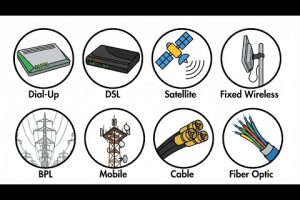
Cable Broadband vs. Other Internet Types
Understanding where cable internet fits in the broader broadband landscape helps you appreciate its strengths and limitations relative to competing technologies.

Cable vs. Fiber-Optic Internet
Fiber-optic internet uses light signals transmitted through glass strands, offering virtually unlimited bandwidth potential and symmetrical upload and download speeds. Cable broadband providers using coaxial infrastructure deliver excellent download speeds but typically offer lower upload throughput. Fiber is more future-proof and less susceptible to congestion, but it is available in far fewer locations than cable internet. For most households, cable broadband provides the best balance of speed, availability, and price.
Cable vs. DSL Internet
DSL uses existing telephone lines and typically maxes out around 100 Mbps for download speeds. Cable internet plans routinely offer speeds from 200 Mbps to 8 Gbps, making cable broadband a far superior choice in areas where both options are available. DSL also suffers from significant speed degradation over distance from the provider’s central office, while cable performance remains relatively stable across neighborhoods.
Cable vs. Fixed Wireless and 5G Home Internet
Fixed wireless and 5G home internet are newer alternatives that do not require physical wiring to your home. While convenient, these services are subject to weather interference, signal obstruction, and data caps that can throttle speeds during heavy usage periods. Cable broadband providers offer more consistent performance, especially during peak evening hours when most households are online.
Cable Broadband Speeds and What to Realistically Expect
Advertised cable internet speeds represent ideal conditions in a lab environment, not your everyday experience. Real-world throughput is typically 80 to 90 percent of the advertised maximum during off-peak hours and can drop significantly during peak usage times between 7 PM and 11 PM. Here is a realistic speed expectation guide based on common cable broadband plan tiers:
- Basic tier (50–100 Mbps): Sufficient for 1–2 users who browse, stream HD video, and do light online gaming.
- Mid-tier (200–400 Mbps): Ideal for families of 3–4 who stream 4K content, work from home, and game simultaneously.
- High-tier (1–2 Gbps): Best for large households with 5+ connected devices, heavy uploaders, and smart home ecosystems.
- Ultra-tier (2–8 Gbps): Designed for power users, content creators, and households running extensive home servers or cloud backup operations.
Running a speed test at multiple times of day over at least one week gives you an accurate picture of your cable broadband provider’s real performance in your specific location. If your consistent results fall below 70 percent of your plan’s advertised speed, contact your provider’s technical support and request a line quality test or modem replacement.
Frequently Asked Questions
What is the best cable broadband provider for rural areas with limited options?
Rural cable broadband availability is limited because coaxial infrastructure rarely extends to sparsely populated areas. Where cable internet is available in rural regions, Mediacom and Windstream are often the most accessible options. However, many rural households find that fixed wireless or satellite internet providers like Starlink offer better value when cable infrastructure is not present. Always check coverage maps directly on the provider’s website rather than relying on third-party listings, as serviceability can vary block by block.
Are cable broadband providers planning to upgrade to full fiber networks?
Several major cable broadband providers have announced fiber-to-the-home (FTTH) expansion plans in select markets. Comcast has been actively deploying fiber in certain neighborhoods through its Xfinity Fiber initiative, while Cox Communications has invested in hybrid fiber-coaxial upgrades. However, full fiber replacement of existing coaxial networks would require billions of dollars in capital investment, so the transition will be gradual and market-by-market rather than nationwide and immediate.
How can I reduce my cable broadband bill without switching providers?
The most effective strategies include enrolling in autopay and paperless billing discounts, downgrading your speed tier if your usage does not justify your current plan, purchasing your own modem and router instead of renting from the provider (saving $15–$20 per month), and asking about loyalty or hardship discount programs. Bundle removal is another lever—if you no longer need the bundled television package, removing it can unlock significant monthly savings.
What should I look for in a cable modem when buying my own equipment?
Ensure the modem is certified for your specific cable broadband provider’s network by checking their approved device list. For most current cable plans, a DOCSIS 3.1 modem is the recommended minimum standard, and it future-proofs your setup for gigabit-tier plans. Popular reliable models include the Motorola MB8600, NETGEAR CM1000, and Arris S33. Avoid purchasing the cheapest unapproved modem as it may not register on your provider’s network and will waste your money.
Do cable broadband providers impose data caps, and how can I avoid overage fees?
Most major cable broadband providers impose a monthly data cap, typically ranging from 1.2 TB to 1.25 TB, with some offering unlimited data on specific plans or at no extra cost. Overage fees generally range from $10 to $15 per 50 GB exceeded. To avoid these charges, monitor your usage through your provider’s online portal, schedule large downloads during off-peak hours, and consider upgrading to an unlimited data plan if you consistently exceed the cap threshold.
Conclusion
Cable broadband providers remain the most accessible and versatile option for home internet across the vast majority of American neighborhoods. Their combination of high download speeds, widespread infrastructure, competitive pricing, and continuous technological upgrades through DOCSIS standards makes them a compelling choice for virtually every household type. The key to maximizing value from cable internet lies in understanding your specific usage needs, comparing plans and providers thoroughly, and negotiating proactively for the best rate. By following the strategies and insights outlined in this guide, you are well-equipped to choose a cable broadband provider that delivers reliable, high-performance internet at a fair price for years to come.