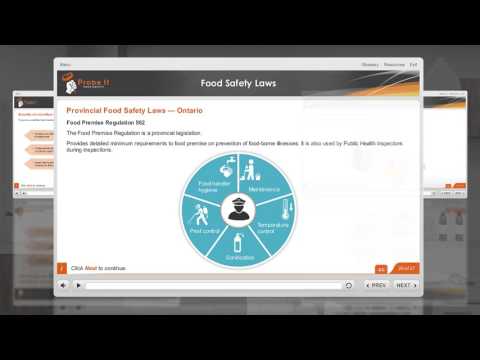
If you work in the food service industry or run a food-related business, you’ve probably heard the term food safety certification online more than once. But what does it actually mean, and why should you care? Whether you’re a restaurant manager, a food truck operator, a caterer, or someone looking to break into the food industry, earning a recognized food safety credential has never been more accessible — or more important. In 2024, online certification programs have matured significantly, offering flexible, affordable, and accredited pathways that meet federal and state regulatory standards. This guide breaks down everything you need to know about obtaining food safety certification through digital platforms, from choosing the right program to understanding what the exam actually covers.
What Is Food Safety Certification Online?
A food safety certification obtained online is a professional credential that verifies your knowledge of proper food handling, preparation, storage, and sanitation practices. Unlike traditional in-person classes, online programs let you complete coursework and examinations entirely through a web-based platform. These certifications are typically aligned with industry standards set by organizations like the American National Standards Institute (ANSI), the National Environmental Health Association (NEHA), and the Food and Drug Administration (FDA) Food Code.
Most online food safety certifications fall into two major categories. The first is the Food Handler Certificate, which covers foundational topics like personal hygiene, cross-contamination prevention, time and temperature control, and cleaning procedures. The second is the Certified Food Protection Manager (CFPM) credential, which goes much deeper into HACCP principles, inspection protocols, and regulatory compliance. Both types are widely recognized across all 50 states, though specific requirements vary by jurisdiction.
Why Online Food Safety Certifications Matter in 2024

The shift toward digital credentialing accelerated dramatically after the COVID-19 pandemic, and the trend has only strengthened. Food businesses now expect their staff to complete food safety training online quickly and efficiently, without the logistical headaches of scheduling in-person workshops. Regulatory bodies themselves have also adapted, increasingly accepting digitally issued certificates as valid proof of compliance during health inspections.
Here are the primary reasons online food safety certification has become essential:
- Regulatory compliance: Many states and counties legally require at least one certified food protection manager on premises at all times during operating hours.
- Liability protection: Businesses with certified staff are statistically less likely to experience foodborne illness outbreaks, reducing legal and financial exposure.
- Employment advantage: Job listings in the food industry increasingly list a valid certification as a prerequisite, especially for supervisory and management roles.
- Convenience: Learners can study at their own pace, revisit material, and take the certification exam whenever they feel prepared.
- Cost efficiency: Online programs typically range from $15 to $150, significantly less than classroom-based alternatives that may cost several hundred dollars.
Key Benefits of Getting Certified Digitally
Beyond the obvious convenience factor, digital certification offers several advantages that traditional methods simply cannot match. Instant credential delivery means you can print your certificate immediately upon passing, making it useful for same-day employment or surprise health inspections. Mobile-friendly platforms allow you to study on your phone during breaks or commutes. Many programs also provide continuing education units (CEUs), which help certified professionals stay current with evolving food safety regulations and best practices.
Top Food Safety Certification Programs Available Online
Not all online certifications are created equal. Accreditation status, exam rigor, and regulatory recognition vary widely between providers. Below is a detailed comparison of the most reputable online food safety certification programs available in the United States.
| Program | Accreditation | Exam Format | Approx. Cost | Validity Period |
| ServSafe Food Handler | ANSI-CFP | Multiple choice, proctored online | $15–$20 | 5 years (Food Handler) |
| ServSafe Manager | ANSI-CFP | 90-question exam, online or in-person | $100–$170 | 5 years (Manager) |
| National Registry of Food Safety Professionals (NRFSP) | ANSI-CFP | 80-question, fully online | $85–$130 | 5 years |
| NEHA Certified Professional – Food Safety | ANSI-CFP | Computer-based testing | $120–$200 | 3–5 years |
| StateFoodSafety.com (Level 1 & 2) | ANSI-CFP | Proctored online exam | $15–$125 | 3–5 years depending on level |
When evaluating options, always confirm that the program carries ANSI-CFP accreditation. This distinction ensures that your certificate meets the rigorous standards required by most health departments and is not merely a completion certificate from an unaccredited provider.
How to Choose the Right Online Food Safety Certification
Choosing the right certification depends on your role, your state’s regulations, and your career goals. If you are a frontline food worker, a food handler certificate is usually sufficient. If you are managing a kitchen or overseeing operations, you will almost certainly need a Certified Food Protection Manager designation. Here are practical steps to guide your decision:

- Check your local regulatory requirements. Visit your state or county health department website to confirm whether the certification needs to be ANSI-accredited and what level is required for your position.
- Compare exam pass rates. Reputable programs typically publish pass rate data. A program with a very high first-time pass rate often indicates better preparation materials.
- Review the study materials. Look for programs that offer practice exams, interactive modules, and mobile access. These features dramatically improve knowledge retention.
- Verify employer acceptance. Before purchasing any program, ask your current or prospective employer whether they recognize the specific certification.
- Consider renewal requirements. Food safety certifications expire. Understanding the renewal process and associated costs upfront prevents surprises down the road.
Expert tip: Avoid “instant certificate” websites that promise a credential in minutes without any actual examination or coursework. These are not recognized by health authorities and will not satisfy legal requirements.
Step-by-Step Guide to Earning Your Certification Online
The process of earning a food safety certification online is straightforward when you follow a structured approach:
- Select an accredited provider from the list above or another ANSI-CFP recognized organization.
- Register and create your account. Most platforms require basic personal information and a valid email address.
- Complete the online coursework. This typically involves reading through modules, watching instructional videos, and completing knowledge checks after each section. Plan for approximately two to eight hours of study time depending on the certification level.
- Prepare for the exam using practice tests. Many platforms include unlimited practice attempts at no extra cost. Use these to identify weak areas.
- Schedule and take the final examination. Most online exams can be taken immediately after completing coursework. You will need a stable internet connection and a webcam for proctoring in many cases.
- Receive and download your certificate. Upon passing, your digital certificate is usually available instantly. Print copies for your employer and keep a digital backup.
Most programs allow you to retake the exam if you do not pass on your first attempt, often with a small additional fee. The key is to study thoroughly rather than rushing through material to get it done quickly.
What Does the Food Safety Certification Exam Cover?
Understanding the exam content helps you prepare effectively. The core topics tested in virtually all accredited food safety certification exams include:
- Personal hygiene — proper handwashing techniques, illness reporting, and uniform standards
- Cross-contamination prevention — separating raw and ready-to-eat foods, sanitizing surfaces and equipment
- Time and temperature control — the temperature danger zone (41°F to 135°F), proper cooking temperatures, cooling procedures, and reheating guidelines
- Cleaning and sanitizing — distinguishing between cleaning and sanitizing, correct chemical concentrations, and dishwashing protocols
- Food sourcing and receiving — inspecting deliveries, checking labels, and storing products correctly
- HACCP principles — identifying critical control points, monitoring procedures, and corrective actions
- Regulatory compliance — understanding local health codes, inspection processes, and documentation requirements
For manager-level certifications, expect additional questions on pest management, facility design, HACCP plan development, and employee training program management.
Common Myths About Online Food Safety Certification
Several misconceptions persist about digital food safety credentials. Let’s address the most common ones:
- Myth: Online certificates are not taken seriously by health inspectors. Reality: ANSI-accredited online certifications are accepted by virtually all health departments nationwide.
- Myth: You can skip the coursework and just take the exam. Reality: Most reputable programs require you to complete the training modules before unlocking the exam.
- Myth: Online certification is much easier than in-person training. Reality: The exam difficulty is identical. The only difference is delivery format.
- Myth: Once certified, you never need to renew. Reality: All certifications expire, typically after three to five years, and renewal involves either re-testing or continuing education.
Conclusion
Earning a food safety certification online is one of the most practical and impactful investments you can make in your food industry career. Whether you need a basic food handler card to meet state requirements or a full Certified Food Protection Manager credential to advance into a leadership role, the digital landscape has made the process more accessible than ever. Choose an ANSI-accredited program, study diligently, and treat the certification as a living standard of knowledge — not just a checkbox on a compliance form. The health of your customers, the reputation of your business, and your own professional credibility all depend on it.
Frequently Asked Questions
1. How long does it take to get a food safety certification online?
Most food handler certifications can be completed within two to four hours of study and testing. Manager-level certifications typically require six to eight hours of coursework plus exam time. Many learners finish the entire process in a single session, though you are free to spread it across multiple days at your own pace.
2. Is an online food safety certification recognized in all states?
ANSI-CFP accredited certifications are recognized in all 50 states and most U.S. territories. However, specific state or local health departments may have additional requirements, so always verify with your local regulatory authority before enrolling.
3. Can I take the food safety certification exam on my phone?
Many platforms offer mobile-responsive interfaces that allow you to study on your phone or tablet. However, the proctored certification exam itself typically requires a computer or laptop with a webcam, a stable internet connection, and a quiet testing environment.
4. What is the difference between a food handler certificate and a certified food protection manager credential?
A food handler certificate covers basic food safety principles and is intended for front-line food workers. A Certified Food Protection Manager credential is a more advanced certification designed for supervisors and managers who are responsible for overseeing food safety operations, developing HACCP plans, and ensuring regulatory compliance.
5. Do I need to renew my online food safety certification, and how often?
Yes, all food safety certifications expire. Food handler certificates typically remain valid for three to five years, while Certified Food Protection Manager credentials generally last five years. Renewal usually involves completing a short refresher course and passing a renewed examination or paying a renewal fee to your accrediting body.