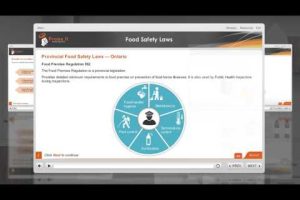
Food safety classes online have transformed the way professionals, home cooks, and business owners learn about proper food handling, sanitation, and regulatory compliance. Whether you are a restaurant manager seeking a food handler card, a catering business owner wanting to meet health department requirements, or simply a passionate home cook who wants to serve meals safely, enrolling in a reputable online food safety course gives you the knowledge and credentials you need from the comfort of your own home.
In recent years, the demand for digital food safety training has surged dramatically. Busy schedules, the rise of remote work, and the increasing need for certified food protection managers have all contributed to the popularity of virtual learning. Unlike traditional classroom settings, online food safety certification programs offer flexibility, cost-effectiveness, and self-paced learning that appeals to a wide range of students across different industries and skill levels.
Why Food Safety Classes Online Are Growing in Popularity

The shift toward digital learning has accelerated across nearly every industry, and food safety training is no exception. Several key factors are driving this trend:
- Flexibility and convenience: Students can access course materials 24/7 from any device with an internet connection, making it easy to fit training around work and personal commitments.
- Cost savings: Online courses typically cost less than in-person training because there are no venue fees, travel expenses, or printed materials.
- Self-paced learning: Learners can move through modules at their own speed, revisiting challenging topics and skipping sections they already understand.
- Immediate access to certification: Many programs offer instant certification upon passing the final exam, which is critical for employment timelines.
- Wider course selection: Students are not limited by geographic location and can choose programs that best fit their career goals and industry needs.
These advantages make online food handler courses an attractive option for small food businesses, large restaurant chains, institutional food service workers, and individuals alike.
What You Will Learn in Online Food Safety Classes
Online food safety training programs cover a comprehensive range of topics designed to equip students with practical knowledge they can apply immediately. The depth of coverage depends on whether you are taking a beginner, intermediate, or advanced level course.
Core Curriculum for Beginners
Entry-level food safety classes online focus on foundational concepts that every food worker should understand:
- Personal hygiene: Proper handwashing techniques, glove use, and illness reporting protocols to prevent cross-contamination.
- Time and temperature control: Understanding the danger zone (40°F to 140°F), proper cooking temperatures for different proteins, and safe cooling and reheating methods.
- Cross-contamination prevention: Separating raw and ready-to-eat foods, using color-coded cutting boards, and implementing proper storage procedures.
- Cleaning and sanitizing: Differences between cleaning and sanitizing, correct chemical concentrations, and approved sanitation schedules.
- Food allergens and safety: Identifying major allergens, preventing allergic reactions, and proper labeling practices.
- Regulatory requirements: Overview of local, state, and federal food safety codes, including FDA Food Code basics.

These beginner courses typically take between one and four hours to complete and culminate in a food handler certificate that satisfies most local health department requirements.
Intermediate and Advanced Food Safety Training Online
For those who already hold a basic food handler certification and want to deepen their expertise, intermediate and advanced programs are available online. These courses are especially valuable for food service managers, kitchen supervisors, and quality assurance professionals.
Intermediate courses build on foundational knowledge by exploring topics such as:
- Advanced temperature monitoring and calibration techniques
- Hazard analysis and corrective action planning
- Workplace sanitation program design
- Food recall procedures and traceability
- Employee health policies and outbreak prevention
Advanced food safety training online often targets certified food protection managers (CFPMs) and includes rigorous study of:
HACCP and Advanced Food Safety Systems
Hazard Analysis and Critical Control Points (HACCP) is the gold standard framework for managing food safety risks in commercial food operations. Advanced online courses teach students how to develop, implement, and audit HACCP plans tailored to their specific food environments, whether that is a commercial kitchen, processing facility, or retail establishment.
Key HACCP principles covered in these programs include conducting thorough hazard analyses, identifying critical control points, establishing critical limits, monitoring procedures, corrective actions, verification processes, and comprehensive record-keeping practices. Mastering these concepts positions food safety professionals for leadership roles and significantly reduces the risk of foodborne illness outbreaks in their establishments.
Best Online Food Safety Certifications Compared
Not all online food safety programs are created equal. The table below compares some of the most widely recognized food safety certification courses available online:
| Program Name | Level | Duration | Cost Range | Best For |
| ServSafe Food Handler | Beginner | 1-2 hours | $15-$25 | Basic food handler certification |
| ServSafe Manager Certification | Advanced | 8-16 hours | $150-$210 | Certified Food Protection Manager exam |
| StateFoodSafety.com | Beginner to Intermediate | 1-4 hours | $10-$40 | State-specific food handler cards |
| National Environmental Health Association (NEHA) | Advanced | 10-20 hours | $120-$300 | Registered Environmental Health Specialists |
| Coursera Food Safety Specializations | Intermediate to Advanced | 4-12 weeks | Free to $79/month | Academic and in-depth learners |
| Learn2Serve by 360training | Beginner to Advanced | 1-8 hours | $15-$65 | Flexible and affordable certification |
When choosing a program, always verify that the certification is recognized by your local health department or regulatory authority. Some jurisdictions have specific requirements about which certifications are accepted for food establishment permits.
How to Choose the Right Online Food Safety Class
Selecting the best online food safety course for your needs requires careful consideration of several factors:
- Check local regulatory requirements: Your state or county health department may specify which certifications are accepted. Verify this before enrolling.
- Evaluate the course content: Look for programs that cover current FDA Food Code standards, recent food safety research, and real-world scenarios.
- Consider your career goals: A basic food handler course may suffice for entry-level workers, while managers and supervisors should pursue a certified food protection manager program.
- Assess the learning format: Some programs offer video-based instruction, interactive quizzes, downloadable resources, and mobile-friendly designs that enhance the learning experience.
- Review the exam and certification process: Ensure the final assessment is rigorous and that the certificate you receive is widely accepted.
- Look for ongoing support: Quality programs offer customer support, study guides, and the ability to retake exams if needed.
Expert Tips for Succeeding in Online Food Safety Training
Even though online courses are flexible, they still require discipline and engagement. Here are proven strategies to maximize your learning:
- Set a dedicated study schedule: Block out specific time each day for your training rather than trying to complete everything in one sitting.
- Take notes on key concepts: Writing down critical temperatures, time limits, and sanitation procedures reinforces memory and retention.
- Use practice exams: Many platforms offer sample tests that mirror the actual certification exam. Use these to identify weak areas before your final assessment.
- Apply knowledge in real time: If you work in a food environment, immediately implement what you learn, whether it is a new handwashing protocol or a revised storage system.
- Join online forums or study groups: Connecting with other students can clarify confusing topics and provide additional perspectives on food safety best practices.
These practical tips help ensure that you not only pass the certification exam but also internalize the food safety principles that protect public health.
Frequently Asked Questions
1. Are online food safety classes accepted by health departments? Most state and local health departments accept online food handler certifications and food protection manager courses from accredited providers. However, requirements vary by jurisdiction, so always confirm acceptance with your local regulatory authority before purchasing a course.
2. How long does a food safety certification last online? A food handler certificate typically needs renewal every two to three years depending on your state’s regulations. Certified Food Protection Manager credentials also require renewal, usually every three to five years, to remain current with the latest food safety standards.
3. Can I get a food handler certificate in one day online? Yes, many beginner-level online food safety classes can be completed in a single day, often within one to four hours. More advanced certifications, such as the ServSafe Manager exam, require more extensive study over several days or weeks.
4. What is the difference between a food handler certificate and a Certified Food Protection Manager (CFPM) credential? A food handler certificate is an entry-level credential that covers basic food safety principles and is required for most food service workers. A CFPM credential is a more advanced certification intended for managers and supervisors who are responsible for overseeing food safety operations and passing a proctored or supervised exam.
5. Do online food safety courses include a final exam? Yes, virtually all reputable online food safety training programs include a final examination. The exam format may include multiple-choice questions, true-or-false items, and scenario-based questions designed to test your practical understanding of food safety principles.
6. What happens if I fail the food safety certification exam online? Most programs allow unlimited or multiple retakes at no additional cost or for a small fee. Reviewing the study materials and taking advantage of practice quizzes before retaking the exam significantly increases your chances of success on the next attempt.
Conclusion
Online food safety classes have become an indispensable resource for anyone involved in food preparation, handling, or service. From beginner food handler courses to advanced HACCP training and certified food protection manager programs, the breadth of available online options means there is a suitable course for every skill level and career goal. By choosing an accredited program, committing to thorough study, and applying your knowledge in real-world food environments, you invest in both your professional development and the safety of the people you serve. Take the first step today, and build a foundation of food safety excellence that will serve you throughout your career.