Every year, thousands of recreational boaters head out on lakes, rivers, and coastal waters without the knowledge or skills needed to handle emergencies at sea. Whether you are a first-time kayak paddler or a seasoned bass fisherman, understanding boating safety fundamentals can mean the difference between a perfect day on the water and a preventable tragedy. Fortunately, free online boating safety courses have made it easier than ever to gain essential knowledge without spending a dime. These digital training programs cover everything from navigation rules and weather awareness to emergency procedures and life jacket requirements. In this comprehensive guide, we will explore the best no-cost boating safety classes available, what you will learn, who benefits most, and how to choose the right program for your skill level. If you are serious about staying safe on the water, this article will serve as your definitive starting point.
Why Free Online Boating Safety Courses Are Worth Your Time
Many aspiring boaters assume that safety training requires expensive in-person classes or costly certifications. That is simply not true anymore. Free watercraft safety training programs have expanded dramatically over the past decade, driven by partnerships between government agencies, nonprofit organizations, and online education platforms. The United States Coast Auxiliary, state maritime authorities, and organizations like BoatUS and the National Safe Boating Council have all invested in creating accessible digital curricula. These courses eliminate the financial barrier that keeps many recreational boaters from learning critical safety information. When you invest just a few hours in a no-cost online program, you gain knowledge about distress signals, fire extinguisher operation, man-overboard protocols, and legal requirements for carrying safety equipment on board your vessel.
The impact of proper training is measurable. According to the U.S. Coast Guard’s Recreational Boating Statistics report, the majority of fatal boating accidents involve operators who never received formal safety instruction. Completing even a basic free boat safety class online dramatically improves your situational awareness and decision-making capability when conditions change quickly on the water. Whether you plan to operate a personal watercraft, a sailboat, or a bass fishing rig, the knowledge you gain from these courses becomes a permanent asset in your skill set.
Top Free Boating Safety Courses Available Online
Not all free boating safety courses are created equal. Some are comprehensive multi-module programs, while others are short introductory guides. Below are the most respected and widely recognized no-cost boating safety certifications you can find on the internet today.
1. BoatUS Foundation Free Online Boating Safety Course
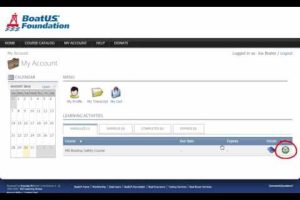
The BoatUS Foundation offers a state-specific course that is accepted in most states requiring boater education. This program covers navigation rules, anchoring techniques, trailering basics, and emergency response procedures. The course uses interactive animations and real-world scenario simulations to reinforce key concepts. It is completely free to study, though some states charge a nominal fee if you need a physical certificate.
2. US Coast Guard Auxiliary Flotilla Courses
Local USCG Auxiliary flotillas frequently host free or low-cost virtual boating safety workshops. These sessions range from single-episode webinars to full multi-day curricula. The content is developed by active and retired Coast Guard personnel, which gives these courses exceptional credibility. Topics typically include federal navigation regulations, Aids to Navigation interpretation, and basic seamanship.
3. NASBLA-Approved Online Programs
The North American Standards Board of Lake Administrators approves several free online courses that meet state requirements for boater education. These programs are particularly valuable because they fulfill legal mandates in states like Texas, California, and Florida. The courses cover state-specific regulations alongside universal boating safety principles.
4. State Maritime Agency Free Resources
Many state parks and natural resource departments publish their own free boating safety guides and video series. These resources often focus on local water conditions, regional hazards, and state-specific legal requirements for personal flotation devices and fire suppression equipment on board.
What You Will Learn in a Free Boating Safety Course
A well-structured learn boating safety online program covers a broad spectrum of topics designed to prepare you for real-world conditions. Here is a breakdown of the core modules you can expect:
- Vessel Familiarization — Understanding the parts of your boat, engine types, steering systems, and basic maintenance checks before every outing.
- Navigation Rules and Right-of-Way — Learning the International Regulations for Preventing Collisions at Sea (COLREGS), including understanding buoys, channel markers, and crossing situations.
- Weather and Water Conditions — How to read weather forecasts, identify approaching storm systems, understand wind patterns on open water, and respond to sudden squalls.
- Emergency Procedures — Man-overboard drills, flare usage, VHF radio distress calls on Channel 16, and deploying throwable flotation devices.
- Legal Requirements and Equipment — State-specific requirements for life jackets, fire extinguishers, sound-producing devices, navigation lights, and boater education cards.
- Environmental Responsibility — Practices for preventing fuel spills, protecting marine habitats, and following invasive species transport regulations.
These topics are presented through a combination of text-based lessons, video demonstrations, interactive quizzes, and downloadable reference materials. The best programs use scenario-based learning, where you must make decisions in simulated emergency situations to reinforce retention.
Who Should Take a Free Boating Safety Course
The short answer is everyone who sets foot on a boat. However, certain groups benefit particularly from free online watercraft safety training:
- New boat owners who have never completed formal safety training and want to understand their legal obligations and practical responsibilities.
- Teenagers and young adults who are preparing for their first personal watercraft experience and need foundational knowledge before heading out unsupervised.
- Seasoned anglers who fish from kayaks, jon boats, or bass boats and assume their years of experience eliminate the need for formal training.
- Parents and guardians responsible for supervising children on the water who want to refresh their emergency response knowledge.
- Boaters relocating to a new state who need to understand different regulatory requirements and local hazard profiles.
Even experienced boaters discover gaps in their knowledge when they revisit updated courses. Regulations change, new technology is introduced, and water safety best practices evolve over time. Treating a free online course as a refresher rather than a one-time requirement keeps your skills sharp and current.
Comparing the Best Free Online Boating Safety Programs
Choosing the right course depends on your goals, location, and vessel type. The following comparison highlights the key differences between the most popular free options:
| Program | Duration | Certificate | Best For | Interactive Elements |
| BoatUS Foundation Course | 3–5 hours | State-accepted (fee in some states) | New boaters and those needing legal certification | Animations, scenario drills |
| USCG Auxiliary Workshops | 1–8 hours | Variable by chapter | Hands-on learners and local community engagement | Live instruction, group exercises |
| NASBLA-Approved Programs | 4–6 hours | Meets state legal requirements | Mandatory education compliance | Quizzes, multimedia lessons |
| State Maritime Agency Guides | 1–3 hours | Usually informational only | Quick knowledge refreshers and local regulations | Videos, downloadable PDFs |
As you can see, the best program for you depends on whether you need a legal certification or simply want to improve your safety knowledge. If you live in a state that mandates boater education, prioritize a NASBLA-approved course. If you are looking for general knowledge and practical skills, the BoatUS Foundation course provides the most well-rounded experience at no cost.
Expert Tips to Maximize Your Free Boating Safety Training
Getting the most value from a free online boating safety course requires more than simply clicking through the lessons. Here are expert-recommended strategies:
- Take notes by hand. Research consistently shows that writing information down improves retention by up to 30 percent compared to passive reading.
- Complete quizzes on the first attempt. Do not rush through assessment sections. Use each quiz as a learning tool, not a box to check.
- Replay video segments on difficult topics. Navigation rules and weather interpretation often require multiple viewings to fully understand.
- Practice what you learn. If a course covers flare usage or VHF radio procedures, rehearse these skills with a partner before your next outing.
- Share the knowledge. Discuss what you learned with fellow boaters, friends, and family members. Teaching reinforces your own understanding.
- Bookmark the course for future reference. Return to modules before the start of each boating season to refresh your memory on key safety protocols.
Common Mistakes to Avoid When Taking Free Boating Safety Courses
Even the best intentions can lead to wasted effort if you make common mistakes. Avoid these pitfalls when selecting and completing your no-cost watercraft safety training:
- Choosing a course that is not accepted in your state for legal certification requirements.
- Skipping the practical application sections and treating the course as purely theoretical.
- Assuming that one free course covers every scenario. Supplement your training with state-specific guides and local hazard information.
- Forgetting to verify the accreditation status of the program. Look for NASBLA approval or USCG recognition when possible.
- Rushing through the material in a single sitting. Spreading your study sessions over several days improves long-term retention significantly.
Final Thoughts
Free online boating safety courses have democratized access to critical knowledge that once required expensive classroom attendance or inconvenient weekend schedules. Today, anyone with an internet connection can learn how to navigate safely, respond to emergencies, and protect themselves and their passengers on the water. The courses outlined in this article represent the highest quality, most trusted resources available at no cost. By investing a few hours in your education now, you are safeguarding your future enjoyment of every boating season ahead. Start with the BoatUS Foundation course or your state’s NASBLA-approved program, take detailed notes, practice the skills you learn, and share this knowledge with others in your boating community. The water will always reward those who respect it — and preparation is the foundation of that respect.
Frequently Asked Questions
1. Are free online boating safety courses accepted for state boater education requirements?
Yes, but only if the specific program is approved in your state. NASBLA-approved courses and BoatUS Foundation programs are widely accepted across most states that require boater education. Always verify with your state’s boating authority before enrolling to confirm the course meets local legal requirements.
2. How long does it take to complete a free online boating safety course?

Most programs range from 1.5 hours to 6 hours depending on the depth of content. Introductory courses can be completed in under two hours, while comprehensive certification programs may require a full weekend of study. You can typically pause and resume at any point, which makes fitting the training into a busy schedule much easier.
3. Do I receive a certificate or card after completing a free boating safety course?
This depends on the program and your state’s regulations. Some free courses issue a completion certificate at no charge, while others charge a small processing fee for the official boater education card. The BoatUS Foundation course, for example, is free to study but may require a fee in certain states for the physical card.
4. Can experienced boaters benefit from taking a free boating safety refresher course?
Absolutely. Even seasoned boaters benefit from updated information on navigation rules, emergency procedures, and evolving state regulations. Safety courses also introduce new boaters to modern technology like GPS chartplotters, digital flare alternatives, and VHF digital selective calling that experienced operators may not have encountered previously.
5. What equipment should I have on board based on what I learn in these courses?
Standard requirements include one U.S. Coast Guard-approved life jacket per person on board, a throwable flotation device, a fire extinguisher, a sound-producing device such as a whistle or horn, navigation lights, and a VHF radio. Some courses also recommend carrying a first aid kit, emergency flares, and a bilge pump, depending on the type and size of your vessel.