


Artificial intelligence has quietly woven itself into nearly every photograph you take, every filter you apply, and every image you share online. The concept of AI in everyday life images is no longer a futuristic idea — it’s a lived reality shaping how billions of people capture, enhance, interpret, and generate visual content daily. From the moment your smartphone camera automatically adjusts exposure before you press the shutter, to the time an AI tool colorizes a black-and-white family photo, intelligent algorithms are working behind the scenes. This comprehensive guide explores the many dimensions of AI in everyday imagery, covering beginner basics, intermediate applications, and advanced developments that are redefining visual culture as we know it.
What Does AI in Everyday Life Images Actually Mean?
Understanding the Core Concept
When we talk about AI in everyday life images, we are referring to the application of artificial intelligence and machine learning models to any visual task encountered in daily routines. This includes image recognition, object detection, photo enhancement, AI-generated artwork, automated tagging, and even computer-powered visual search. Unlike traditional image processing that relied on hardcoded rules, modern AI systems learn from millions of data points to make intelligent decisions about visual content.
The difference matters. Traditional software follows a programmer’s explicit instructions. AI-powered image tools recognize patterns, adapt to new inputs, and improve over time without being reprogrammed. That adaptive quality is what makes AI image processing feel almost magical in day-to-day use.
- Image Recognition: AI identifies objects, faces, text, and scenes within photos.
- Image Generation: AI creates entirely new images from text prompts or data.
- Image Enhancement: AI improves resolution, removes noise, and corrects colors.
- Image Classification: AI sorts and categorizes photos automatically.
How AI Transforms Smartphone Photography
Your smartphone is arguably the most powerful AI camera most people will ever own. Every major manufacturer — Apple, Google, Samsung, Xiaomi — now relies heavily on computational photography, a discipline where AI algorithms process multiple frames in real time to produce a superior image.
Computational Photography in Detail
When you take a night mode photo, your phone doesn’t simply brighten the image. It captures several exposures in rapid succession, then an AI model aligns them, reduces noise, and synthesizes a single optimized image with balanced lighting and natural colors. This process, called multi-frame fusion, is entirely driven by deep learning models trained on vast datasets of photographic quality judgments.
Key AI-driven smartphone camera features include:
- Scene Detection: The AI recognizes whether you’re photographing food, landscapes, or portraits and adjusts processing parameters accordingly.
- Portrait Mode: AI-generated depth maps simulate bokeh by distinguishing the subject from the background with remarkable precision.
- Face Optimization: AI subtly enhances facial features while preserving natural skin texture.
- Real-Time Translation: Some cameras overlay translated text on foreign signs using AI-powered optical character recognition.
- Motion Prediction: AI compensates for hand shake by predicting movement trajectories during exposure.
AI-Generated Images: A New Creative Frontier
How Text-to-Image Models Work
One of the most visible examples of AI in everyday life images is the rise of text-to-image generators. Tools like DALL-E, Midjourney, and Stable Diffusion have made it possible for anyone to create photorealistic images from simple text descriptions. These models use a technique called diffusion, where images are progressively degraded with noise and the AI learns to reverse the process, effectively generating images from pure randomness guided by language understanding.
The practical applications extend far beyond novelty. Small business owners generate marketing visuals without hiring photographers. Writers illustrate blog posts without sourcing stock photos. Educators create custom diagrams for lesson plans. The democratization of visual content creation is unprecedented.
However, this technology raises legitimate concerns about deepfakes, copyright, and misinformation. Responsible use and clear labeling of AI-generated content remain critical ongoing conversations in the field.
AI-Powered Photo Editing and Enhancement Tools
The AI photo editing market has exploded, offering tools that were previously available only to professionals with years of experience in software like Adobe Photoshop. Today, AI handles complex tasks in seconds with minimal user input.
| Feature | Traditional Editing | AI-Powered Editing |
| Background Removal | Manual masking, time-consuming | Automatic, completed in seconds |
| Noise Reduction | Blurs fine details | Preserves detail while removing grain |
| Upscaling | Pixel interpolation, limited quality | Generates new detail, dramatically sharper |
| Colorization | Manual hand-painting | Context-aware automatic coloring |
| Retouching | Requires skilled technique | One-click AI enhancement |
Practical Recommendations for Users
Whether you are a beginner or a professional, integrating AI tools into your editing workflow can dramatically improve output quality. Start with built-in smartphone features like Smart Enhance or Night Mode before exploring third-party applications. For intermediate users, tools like Adobe Firefly, Canva’s AI suite, or Luminar Neo offer a balanced combination of power and accessibility. Advanced users should explore Stable Diffusion with ControlNet for precise control over AI-generated imagery.
Expert tip: Always keep your original unedited files. AI enhancement is powerful, but non-destructive workflows preserve creative flexibility and prevent over-processing artifacts.
Computer Vision in Daily Life Applications
Beyond Photography: Real-World Image Recognition
Computer vision, the broader discipline behind AI image understanding, touches countless aspects of daily life that many people never consider. When your bank’s mobile app verifies your identity through a facial recognition scan, that’s computer vision. When a retail store uses cameras to track inventory on shelves, that’s computer vision. When a navigation app reads street signs and house numbers from satellite imagery, again, computer vision.

Everyday applications of AI-powered computer vision include:
- Facial Authentication: Unlocking phones, boarding flights, and accessing secure facilities.
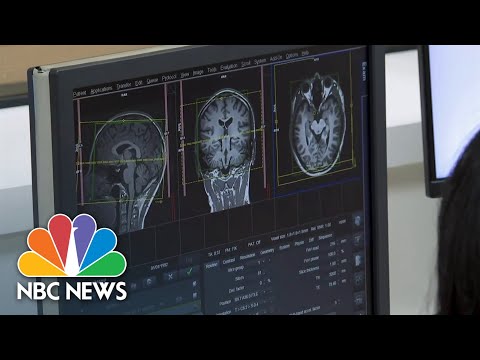
- Medical Screening: AI analyzes X-rays, MRIs, and retinal scans for early disease detection.
- Autonomous Vehicles: Self-driving cars interpret camera feeds to identify pedestrians, lanes, and obstacles.
- Retail Analytics: Stores track customer behavior and product placement through visual data.
- Accessibility: AI reads text aloud and describes scenes for visually impaired users.
- Agriculture: Drones equipped with AI identify crop diseases from aerial imagery.
AI in Medical Imaging: Saving Lives Through Visual Intelligence
Perhaps no area demonstrates the profound impact of AI in everyday life images more clearly than healthcare. AI algorithms trained on millions of medical images can now detect early-stage cancers, identify fractures, and diagnose eye diseases with accuracy matching or exceeding human specialists.
Google’s DeepMind developed an AI system that detects over 50 eye diseases from retinal scans with 94% accuracy. IBM Watson aids oncologists by analyzing medical imaging alongside patient records. In developing countries where radiologists are scarce, portable AI-powered diagnostic tools bring expert-level analysis to remote clinics via smartphone attachments.
This is not about replacing doctors. It is about augmenting their capabilities, reducing diagnostic errors, and ensuring that high-quality medical image analysis is accessible regardless of geography or economic status.
Privacy, Ethics, and the Responsible Use of AI Imagery
With great power comes significant responsibility. The proliferation of AI-generated images and visual recognition systems introduces serious ethical questions. Deepfake technology can fabricate convincing videos of people saying things they never said. Facial recognition systems have demonstrated measurable bias across demographic groups. Data privacy concerns arise when companies collect biometric information from everyday images.
To navigate these challenges thoughtfully:
- Demand transparency: Use platforms that clearly disclose AI-generated content.
- Audit AI systems: Organizations should regularly test models for demographic bias.
- Protect consent: Never use someone’s likeness for AI training without explicit permission.
- Stay informed: Understand the legislation governing AI imagery in your jurisdiction.
- Verify sources: Develop media literacy skills to identify potentially AI-manipulated content.
Responsible development and use of AI in visual contexts is not optional — it is a prerequisite for the technology’s sustainable integration into society.
Future Trends in AI and Everyday Imagery
The trajectory of AI in everyday life images points toward increasingly seamless integration. Near-term developments worth watching include:
- On-Device AI: Increasingly powerful mobile processors will run sophisticated image models entirely on-device, improving privacy and reducing latency.
- Multimodal AI: Systems that understand images, text, audio, and video simultaneously will power richer interactive experiences.
- AR Integration: Augmented reality overlays driven by real-time AI image segmentation will transform navigation, education, and retail.
- Personalized AI Photographers: AI systems that learn your visual preferences and style over time, automatically curating and editing photos to match your aesthetic.
- Proactive Health Monitoring: Wearable devices analyzing skin images in real time for early warning signs of medical conditions.
Each of these trends reinforces the idea that AI and everyday imagery are becoming inseparable, with profound implications for how humans interact with the visual world.
Conclusion
The presence of AI in everyday life images is no longer a glimpse into the future — it is the present we live in. From computational photography on the device in your pocket to life-saving diagnostic tools in hospitals, artificial intelligence has fundamentally transformed how images are created, understood, and utilized. The technology offers extraordinary benefits: convenience, accessibility, creative empowerment, and improved safety. At the same time, it demands thoughtful engagement with privacy, ethics, and the preservation of human judgment. By understanding both the capabilities and the responsibilities, individuals and societies can harness the full potential of AI in visual culture while navigating its risks wisely. The image-rich future is already here. The question is how we choose to shape it.